
Upwork Job Success Score explained: how it's calculated and how to raise it
Understand how the Upwork Job Success Score is calculated and learn practical steps to raise your score. Clear examples and useful tips for freelancers.
- →Upwork's Job Success Score reflects how your contracts turned out: client feedback, long-term relationships and negative outcomes.
- →Only contracts with activity in the past 24 months count, and Upwork shows the highest of several time-window scores on your profile.
- →Higher-earning and long-term contracts carry more weight, and negative outcomes on big contracts can pull your score down fast.
- →Raising your score means delighting clients, targeting the right jobs, and maintaining a steady stream of positive contracts.
- →Monitor your contract outcomes and learn which jobs help or hurt your JSS.
Introduction
The Upwork Job Success Score (JSS) is a key metric Upwork uses to show how reliably you deliver results to clients. Upwork looks at your contracts from the past 24 months, calculates scores over several time windows, and shows the highest one on your profile. Contracts with good feedback or that become long-term relationships help your score, while bad feedback and disputes hurt it. To raise your JSS, you need a steady track record of satisfied clients, positive feedback and long-running contracts. Focus on jobs you're confident you can complete well, encourage honest client reviews, and avoid projects that seem risky or are a poor fit. Use Upwork's Job Success insights page to see what's helping or hurting your JSS so you can adjust.
How the Upwork Job Success Score is calculated
Upwork calculates your Job Success Score from your eligible contracts over the past 24 months. It works out scores over several time windows and displays the highest one. Upwork doesn't publish the exact formula or weights, but its help pages are clear on the inputs. Successful outcomes include contracts with positive feedback and long-term relationships: a job counts as successful once its payments continue past 90 days from the client's first payment, even if the client never leaves feedback. Negative outcomes include poor feedback, disputes and contracts that end badly. Contracts whose last payment was more than 24 months ago drop out, and contracts that end without feedback are excluded unless they became long-term relationships.
What impacts your JSS: positive and negative outcomes
A contract counts as a success if you earn positive feedback or the client keeps paying you for more than 90 days. That means a freelancer with several small but happy contracts, or one with a steady long-term client, will see their JSS climb. On the other hand, negative outcomes such as disputes, poor ratings or early cancellations by clients can drag your score down, especially on higher-paying contracts. Contracts that end without any feedback are left out unless they became long-term, so they won't help or hurt you.
It’s useful to understand which jobs count and which don’t when you review your progress. Upwork’s Job Success insights page shows this breakdown, so use it to avoid surprises.
Why bigger and long-term contracts matter more
Upwork doesn't treat all jobs equally. Contracts with higher earnings weigh more in your overall score, both positively and negatively. Doing extremely well on a $2,000 project counts for more than a $50 job, and if that $2,000 job ends badly, it's a much bigger hit. Long-term contracts matter too: Upwork counts every 90 days of continued payments as an extra job in your score, up to a weight of eight jobs. Nurturing repeat clients and longer relationships has a direct benefit beyond steady income.
Choosing big or ongoing projects only makes sense when you’re sure you can deliver a strong outcome—so be realistic about your fit and bandwidth.
How to raise your Upwork Job Success Score
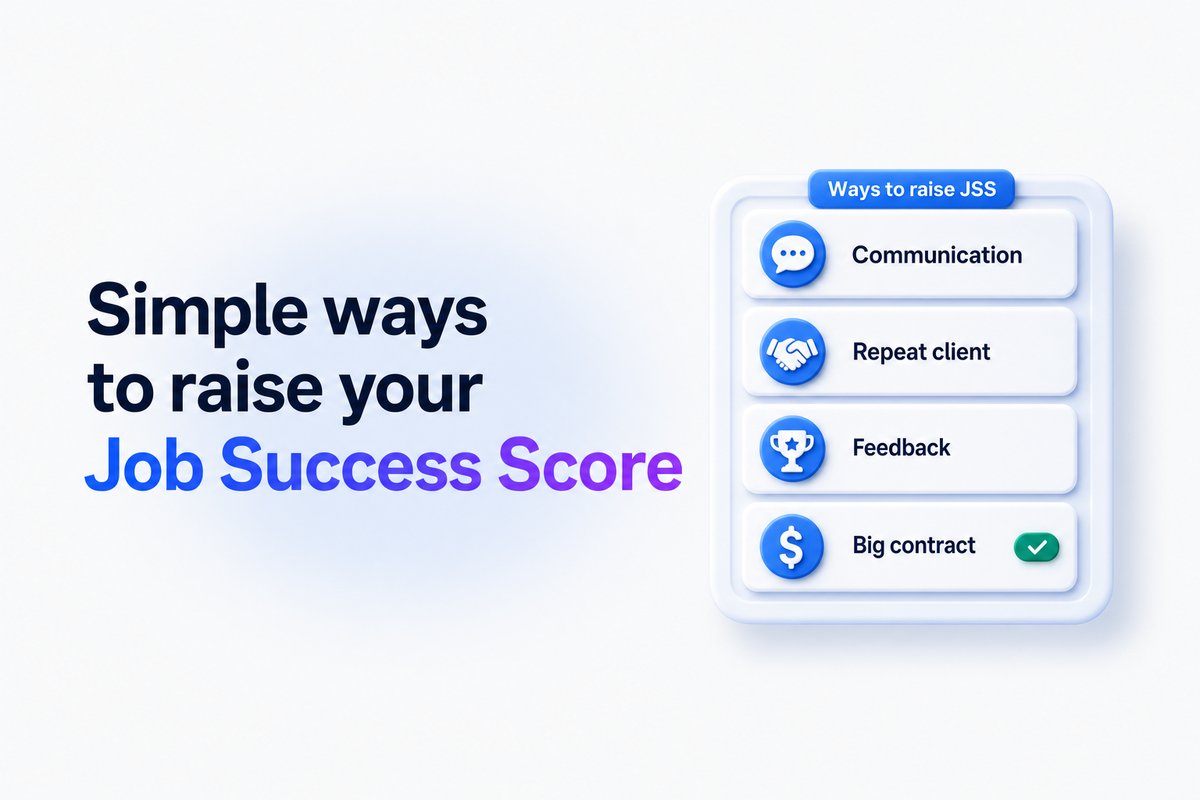
Focus on great communication, clear expectations, and timely results. Most feedback issues happen because of misunderstandings or delayed delivery, not skills. Make a habit of asking happy clients for honest feedback after wrap-up. You can’t pressure people, but a gentle note can help.
Target job types and client profiles you know you can crush, rather than rolling the dice on unclear or complex requests. It’s also smart to focus on long-term client relationships and high-value contracts, since both can give your JSS a bigger boost.
Regularly check your Job Success insights to spot patterns. If you see certain types of clients or jobs tend to go badly, adjust your filters and only apply to better-aligned work. Tools like WinOnUp’s client and job filters help you qualify jobs up-front so you only spend Connects on contracts likely to help your score.
Staying eligible and managing JSS over time
Your JSS only includes contracts with activity in the last 24 months, so old bad outcomes eventually age out. Your score is never set in stone. To keep rising, avoid long gaps in contract flow: keep finding and finishing new work so good outcomes steadily replace the old.
If you’re not getting the invites or views you want, check out these ways to get found on Upwork, since visibility drives the steady flow of jobs you need for a strong JSS.
Monitor, learn, and automate where it helps
Use your Upwork Job Success insights page often—it shows which contracts count, which don’t, and why. This lets you learn what’s hurting or helping your score so you can adjust your approach. Analyze which types of projects, budgets, or clients line up with good outcomes so you can improve over time.
For freelancers wanting to qualify clients faster or filter out risky jobs, WinOnUp’s job table, filters, and client scores can save hours—plus, you get near-instant alerts for new jobs so you never miss the best fit.
Conclusion
Your Upwork Job Success Score is all about steady, positive relationships and reliable results. By choosing the right jobs, delivering top service, and watching your pattern of outcomes, you can maintain or raise your JSS—even if you’ve had a rough patch. Don’t underestimate the power of good feedback or long-term contracts: they make a difference faster than you think.
If you want to automate finding quality jobs and clients that fit—with no card needed to sign up—see how WinOnUp makes it easier.
Frequently asked questions
When does the Upwork Job Success Score update?
Upwork recalculates your score on a regular cycle and shows the highest of several recent time windows. Your Job Success insights page shows which contracts are currently counting.
Do all contracts count toward JSS?
No. Contracts whose last payment was more than 24 months ago are excluded, and so are contracts that ended without feedback, unless they became long-term relationships.
What can I do if I get negative feedback?
Focus on delivering consistently great work and landing new successful contracts. Negative outcomes carry weight, but as new positive contracts are completed, old ones eventually 'age out' of the calculation.
How do I find contracts that won’t hurt my JSS?
Qualify jobs up-front by checking client hire rate, budget, and prior feedback. Tools like WinOnUp’s filters and client scoring can help you spot better matches before you apply.
Does a long-term contract help even without feedback?
Yes. Once payments on a job continue past 90 days from the client's first payment, Upwork counts it as a successful outcome, even if the client never leaves feedback.
Stop missing the Upwork jobs worth your Connects.
- New-job alerts every 60 seconds by email, Discord or Google Chat
- Client hire rate, spend and proposal count before you apply
- See what your Connects actually return
No card needed to sign up · 14-day free trial · Cancel anytime
Related guides
Learn what Uma on Upwork is, how Upwork's AI recruiter selects freelancers, and what it means for your freelance job search and invites.
Get more invites on Upwork by fixing your profile skills, title and categories, the fields Upwork search uses to put you in front of clients.
Learn how to quickly find good Upwork jobs by filtering for quality projects, trustworthy clients, and high return on your Connects in 2026.